

Posted by
science mix
comments (0)

Africa has some of the most dangerous and venomous snakes in the world. Get your facts and information about the Black Mamba, Boomslang, Puff Adder, Gaboon Viper, Egyptian Cobra and more of Africa's deadly snakes. Find out what the different types of snake venom will do to the victims body.
Remember, fatalities from snake bites are quite rare and the vast majority of snakes are actually not venomous. Venomous snakes will often avoid humans, and if they bite they rarely inject their full venom load.
The Black Mamba (Dendroaspis polylepis) is one of Africa's most dangerous snakes and feared in East, Central and Southern Africa. It's aggressive when cornered and will not hesitate to strike. It can reach speeds of up to 12 mph (20 km/ph). It's the largest venomous snake in Africa with adults reaching an average of 8 feet in length (2.5m). Black Mamba's are not black at all, but brown/olive skinned. Their mouths are inky black which they show when threatened. Black Mambas live in savanna, scrub, tree hollows, and sometimes people's homes. If a Black Mamba encounters prey it can strike up to 12 times, each time delivering enough neuro and cardio-toxic venom to kill a dozen men within 1 hour. Without anti-venom, the mortality rate is 100%.
Puff Adder
CC

The Puff Adder (Bitis arietans) is considered to be Africa's deadliest snake because it is responsible for the most human fatalities. Puff Adders reach an average length of around 1 meter, and they're solidly built with a wide girth. Color patterns vary depending on where they live, their habitats extend throughout Africa except for dense rain forests and deserts. The Puff Adder has large fangs and its venom is powerful enough to kill a grown man with a single bite. Puff Adders rely on camouflage for protection and lie still if approached. Because of this, people tend to step on them and get bitten. Many fatalities occur because bites are not treated correctly, leading to infection and gangrene.
Boomslang
© wwarby/Flickr

The Boomslang (Dispholidus typus) is an extraordinarily dangerous snake found in sub-Saharan Africa. Human fatalities are rare, since this snake is very timid, but spectacular. It's venom is haemotoxic, which means that it affects the body’s natural blood clotting mechanism resulting in the bleeding of the internal organs. Sometimes it can take as long as 24 hours before the symptoms of the venom can be felt or seen. Once it gets to work however, a person can bleed to death from every orifice. The Boomslang is a tree-dwelling snake (Boomslang means "tree snake" in Afrikaans). Females are brown, and males are light green with black highlights. The Boomslang reaches an average length of 5 feet. Its fangs are at the back of its head.
Gaboon Viper
Tom Brakefield/Getty Images

The Gaboon Viper (Bitis gabonica) has the longest fangs and the highest venom yield of any venomous snake in the world. Gaboon Vipers can be found in West, Central and parts of East Africa, they prefer forested areas. Adults reach an average length of around 5 feet. While the Gaboon Viper delivers a huge dose of venom, the venom is not as toxic as some of the other snakes on this list. A single bite could kill a man however. Gaboon Vipers are very interesting looking snakes with a huge triangular shaped heads and pretty black, brown and pink markings. Gaboon Vipers are quite passive and rarely bite unless provoked or stepped on (even then they don't always bite).
Egyptian Cobra
Getty Images/Robert Nunnington

The Egyptian Cobra (Naja haje) is a deadly venomous snake most commonly found in Egypt but also in other parts of North Africa. The Egyptian Cobra has glands located behind its eyes which produce a deadly neurotoxic venom that's released through its large fangs. The venom of an Egyptian Cobra is so deadly it can kill a full grown Indian Elephant in 3 hours. In humans its venom causes paralysis and death due to respiratory failure. The adults average about 2m in length and are usually yellowish to dark brown with brown cross bands. Egyptian Cobras are aggressive snakes that live in dry to moist savanna and semi-desert regions. It is thought that Cleopatra used an Egyptian Cobra to commit suicide.
Saw-Scaled Viper or Carpet Viper
CC

The Saw-Scaled or Carpet Viper (Echis genus) are small, bad tempered, highly venomous snakes found north of the equator in Africa. Adults vipers reach an average length of just 20-30 inches. Their venom is hemotoxic and very virulent. This means the venom causes spontaneous internal bleeding, sometimes days after the bite has occurred. The Saw-Scaled viper is named for the sound it makes as its scales rub together producing a warning sound similar to a "sizzle". These venomous vipers are active after dark and that's when most of their victims are bitten.
Cape Cobra
Getty Images/Martin Harvey

The Cape Cobra (Naja nivea) has a powerful venom and is one of the deadliest snakes in Southern Africa. Cape Cobras grow to an average of around 4 feet. Cape Cobras are particularly dangerous because they tend to be nervous and aggressive. Without treatment, the mortality rate in humans is 60% and death normally occurs 2-5 hours after being bitten, usually as a result of respiratory failure due to the onset of paralysis. The Cape Cobra is a beautiful looking snake some are yellow, some copper/mahogany colored and some are purplish/black. The Cape Cobra loves to hunt for rodents and can climb trees to raid weaver bird colonies. The Cape Cobra is common throughout dry regions in Southern Africa.
Eastern Green Mamba
Getty Images/Martin Harvey

The Eastern Green Mamba (Dendroaspis angusticeps) is a venomous snake related to the highly dangerous Black Mamba. The Green Mamba is less aggressive and smaller than the Black Mamba, they average around 6 feet. The Green Mamba's venom is also significantly less toxic, however a single bite could certainly be fatal to a human. Green mambas are highly arboreal and almost never touch the ground. They are generally found in south-eastern Africa. Like their name, Green Mambas are a lovely grass green color, but yellow when born.
Ads
Kruger park safari caynon3 Night D/B/B 2 full day game drive and night drive for only R 4100 p/pwww.grandkrugerlodge.co.zaAfrica PresidentsRead expert commentaries on African politicswww.africaportal.org/
Snake Venom and What it Does to its Victims
Getty Images

- Neurotoxic venom - Cobras and Mambas - attacks the central nervous system, and starts to affect movement, breathing, swallowing, speech and sight.
- Haematoxic venom - Boomslang - affects the blood by using up the clotting factors so it no longer coagulates leading to extensive blood loss into the tissues.
- Cytotoxic venom - Puff Adders - attacks the body cells or tissues, this bite is extremely painful, with much swelling and marked symptoms of shock.
- Myotoxic venom - sea snakes - attacks the muscles and can lead to death from kidney and heart failure.
Posted by
science mix
comments (0)

Steve Jobs was born February 24, 1955, to two University of Wisconsin graduate students who gave him up for adoption. Smart but directionless, Jobs experimented with different pursuits before starting Apple Computers with Stephen Wozniak in the Jobs' family garage. Apple's revolutionary products, which include the iPod, iPhone and iPad, are now seen as dictating the evolution of modern technology.
Contents
Quotes
I would trade all of my technology for an afternoon with Socrates.
– Steve Jobs
Early Life
Steven Paul Jobs was born on February 24, 1955, to Joanne Simpson and Abdulfattah "John" Jandali, two University of Wisconsin graduate students who gave their unnamed son up for adoption. His father, Abdulfattah Jandali, was a Syrian political science professor and his mother, Joanne Simpson, worked as a speech therapist. Shortly after Steve was placed for adoption, his biological parents married and had another child, Mona Simpson. It was not until Jobs was 27 that he was able to uncover information on his biological parents.As an infant, Steven was adopted by Clara and Paul Jobs and named Steven Paul Jobs. Clara worked as an accountant and Paul was a Coast Guard veteran and machinist. The family lived in Mountain View within California's Silicon Valley. As a boy, Jobs and his father would work on electronics in the family garage. Paul would show his son how to take apart and reconstruct electronics, a hobby which instilled confidence, tenacity, and mechanical prowess in young Jobs.
While Jobs has always been an intelligent and innovative thinker, his youth was riddled with frustrations over formal schooling. In elementary school he was a prankster whose fourth grade teacher needed to bribe him to study. Jobs tested so well, however, that administrators wanted to skip him ahead to high school—a proposal his parents declined.
After he did enroll in high school, Jobs spent his free time at Hewlett-Packard. It was there that he befriended computer club guru Steve Wozniak. Wozniak was a brilliant computer engineer, and the two developed great respect for one another.
Apple Computers
After high school, Jobs enrolled at Reed College in Portland, Oregon. Lacking direction, he dropped out of college after six months and spent the next 18 months dropping in on creative classes. Jobs later recounted how one course in calligraphy developed his love of typography.In 1974, Jobs took a position as a video game designer with Atari. Several months later he left Atari to find spiritual enlightenment in India, traveling the continent and experimenting with psychedelic drugs. In 1976, when Jobs was just 21, he and Wozniak started Apple Computers. The duo started in the Jobs family garage, and funded their entrepreneurial venture after Jobs sold his Volkswagen bus and Wozniak sold his beloved scientific calculator.
Jobs and Wozniak are credited with revolutionizing the computer industry by democratizing the technology and making the machines smaller, cheaper, intuitive, and accessible to everyday consumers. The two conceived a series of user-friendly personal computers that they initially marketed for $666.66 each. Their first model, the Apple I, earned them $774,000. Three years after the release of their second model, the Apple II, sales increased 700 percent to $139 million dollars. In 1980, Apple Computer became a publically traded company with a market value of $1.2 billion on the very first day of trading.
Departure from Apple
However, the next several products from Apple suffered significant design flaws resulting in recalls and consumer disappointment. IBM suddenly surpassed Apple sales, and Apple had to compete with an IBM/PC dominated business world. In 1984 Apple released the Macintosh, marketing the computer as a piece of a counter culture lifestyle: romantic, youthful, creative. But despite positive sales and performance superior to IBM's PCs, the Macintosh was still not IBM compatible. Scully believed Jobs was hurting Apple, and executives began to phase him out.In 1985, Jobs resigned as Apple's CEO to begin a new hardware and software company called NeXT, Inc. The following year Jobs purchased an animation company from George Lucas, which later became Pixar Animation Studios. Believing in Pixar's potential, Jobs initially invested $50 million of his own money into the company. Pixar Studios went on to produce wildly popular animation films such as Toy Story, Finding Nemo and The Incredibles. Pixar's films have netted $4 billion. The studio merged with Walt Disney in 2006, making Steve Jobs Disney's largest shareholder.
Reinventing Apple
Despite Pixar's success, NeXT, Inc. floundered in its attempts to sell its specialized operating system to mainstream America. Apple eventually bought the company in 1997 for $429 million. That same year, Jobs returned to his post as Apple's CEO.Much like Steve Jobs instigated Apple's success in the 1970s, he is credited with revitalizing the company in the 1990s. With a new management team, altered stock options, and a self-imposed annual salary of $1 a year, Jobs put Apple back on track. His ingenious products such as the iMac, effective branding campaigns, and stylish designs caught the attention of consumers once again.
Pancreatic Cancer
In 2003, Jobs discovered he had a neuroendocrine tumor, a rare but operable form of pancreatic cancer. Instead of immediately opting for surgery, Jobs chose to alter his pescovegetarian diet while weighing Eastern treatment options. For nine months Jobs postponed surgery, making Apple's board of directors nervous. Executives feared that shareholders would pull their stocks if word got out that their CEO was ill. But in the end, Job's confidentiality took precedence over shareholder disclosure. In 2004, he had a successful surgery to remove the pancreatic tumor. True to form, in subsequent years Jobs disclosed little about his health.Recent Innovations
Apple introduced such revolutionary products as the Macbook Air, iPod, and iPhone, all of which have dictated the evolution of modern technology. Almost immediately after Apple releases a new product, competitors scramble to produce comparable technologies. In 2007, Apple's quarterly reports were the company's most impressive statistics to date. Stocks were worth a record-breaking $199.99 a share, and the company boasted a staggering $1.58 billion dollar profit, an $18 billion dollar surplus in the bank, and zero debt.In 2008, iTunes became the second biggest music retailer in America-second only to Wal-Mart. Half of Apple's current revenue comes from iTunes and iPod sales, with 200 million iPods sold and six billion songs downloaded. For these reasons, Apple has been rated No. 1 in America's Most Admired Companies, and No. 1 amongst Fortune 500 companies for returns to shareholders.
Personal Life
Early in 2009, reports circulated about Jobs' weight loss, some predicting his health issues had returned, which included a liver transplant. Jobs had responded to these concerns by stating he was dealing with a hormone imbalance. After nearly a year out of the spotlight, Steve Jobs delivered a keynote address at an invite-only Apple event September 9, 2009.In respect to his personal life, Steve Jobs remained a private man who rarely discloses information about his family. What is known is Jobs fathered a daughter with girlfriend Chrisann Brennan when he was 23. Jobs denied paternity of his daughter Lisa in court documents, claiming he was sterile. Jobs did not initiate a relationship with his daughter until she was 7 but, when she was a teenager, she came to live with her father.
In the early 1990s, Jobs met Laurene Powell at Stanford business school, where Powell was an MBA student. They married on March 18, 1991, and lived together in Palo Alto, California, with their three children.
Final Years
On October 5, 2011, Apple Inc. announced that co-founder Steve Jobs had died. He was 56 years old at the time of his death.
Posted by
science mix
comments (0)
Adrenaline is a hormone produced by the adrenal glands during high stress or exciting situations. This powerful hormone is part of the human body's acute stress response system, also called the "fight or flight" response. It works by stimulating the heart rate, contracting blood vessels, and dilating air passages, all of which work to increase blood flow to the muscles and oxygen to the lungs. Additionally, it is used as a medical treatment for some potentially life-threatening conditions including anaphylactic shock. In the US, the medical community largely refers to this hormone as epinephrine, although the two terms may be used interchangeably.
 The adrenal glands are found directly above the kidneys in the human body, and are roughly 3 inches (7.62 cm) in length. Adrenaline is one of several hormones produced by these glands. Along with norepinephrine and dopamine, it is a catecholamine, which is a group of hormones released in response to stress. These three hormones react with various body tissues, preparing the body to react physically to the stress causing situation.
The Adrenal Glands

Posted by
science mix
comments (0)
Human flight has become a tired fact of modern life. At any given moment, roughly 5,000 airplanes crisscross the skies above the United States alone, amounting to an estimated 64 million commercial and private takeoffs every year [source: NATCA]. Consider the rest of the world's flight activity, and the grand total is incalculable.
It is easy to take the physics of flight for granted, as well as the ways in which we exploit them to achieve flight. We often glimpse a plane in the sky with no greater understanding of the principles involved than a caveman.
How do these heavy machines take to the air? To answer that question, we have to enter the world of fluid mechanics.
Physicists classify both liquids and gases as fluids, based on how they flow. Even though air, water and pancake syrup may seem like very different substances, they all conform to the same set of mathematical relationships. In fact, basic aerodynamic tests are sometimes performed underwater. To put it simply, a salmon essentially flies through the sea, and a pelican swims through the air.
The core of the matter is this: Even a clear sky isn't empty. Our atmosphere is a massive fluid layer, and the right application of physics makes it possible for humans to traverse it.
In this article, we'll walk through the basic principles of aviation and the various forces at work in any given flight.
It is easy to take the physics of flight for granted, as well as the ways in which we exploit them to achieve flight. We often glimpse a plane in the sky with no greater understanding of the principles involved than a caveman.
How do these heavy machines take to the air? To answer that question, we have to enter the world of fluid mechanics.
Physicists classify both liquids and gases as fluids, based on how they flow. Even though air, water and pancake syrup may seem like very different substances, they all conform to the same set of mathematical relationships. In fact, basic aerodynamic tests are sometimes performed underwater. To put it simply, a salmon essentially flies through the sea, and a pelican swims through the air.
The core of the matter is this: Even a clear sky isn't empty. Our atmosphere is a massive fluid layer, and the right application of physics makes it possible for humans to traverse it.
In this article, we'll walk through the basic principles of aviation and the various forces at work in any given flight.
Posted by
science mix
comments (0)
Nose Bleed Prevention Tips
- USE A HUMIDIFIER
If you live in a dry climate use a humidifier year round, in other climates run a humdifier during the winter months when forced heat from your furnace is creating a dry atmosphere (especially at night time while you are sleeping).
- USE SALINE SPRAY
Saline (salt water) spray for your nose three to four times daily helps reduce drying out of the mucus membranes in your nose and help prevent nose bleeds.
Herbal Treatments and Precautions for Nose Bleeds
- Astringent herbs can be used topically to decrease or eliminate bleeding.
- Agrimony
- Yarrow
- Witch Hazel
- Bilberry herb decreases the fragility of small blood vessels.
- Rescue Remedy is recommended for onset of trauma due to a nose bleed for its calming effect to slow down the heart rate. Slowing down the heart rate will slow the flow of the bleeding.
- Stop using Ginkgo Biloba if you are experiencing nose bleeds, this popular herb used for mental alertness can increase the risk of bleeding.
Recommended Nutritional Supplements
- VITAMIN C
Deficiency in Vitamin C is associated with epistaxis. - VITAMIN K
Bleeding problems can occur with a vitamin K deficiency. Vitamin K helps the blood clotting process. Adequate amounts of vitamin K can be assured by consuming plenty of fruits and vegetables. - VITAMIN E
Vitamin E squeezed from a gel cap can be applied inside the nose as a lubricant to dry airways. However, Vitamin E is more likely to increase the risk of bleeding in patients on anticoagulant medications. - ZINC
Natural wound healer. Low zinc levels can impair wound healing
Posted by
science mix
comments (0)
What is Geology? - What Does a Geologist Do?
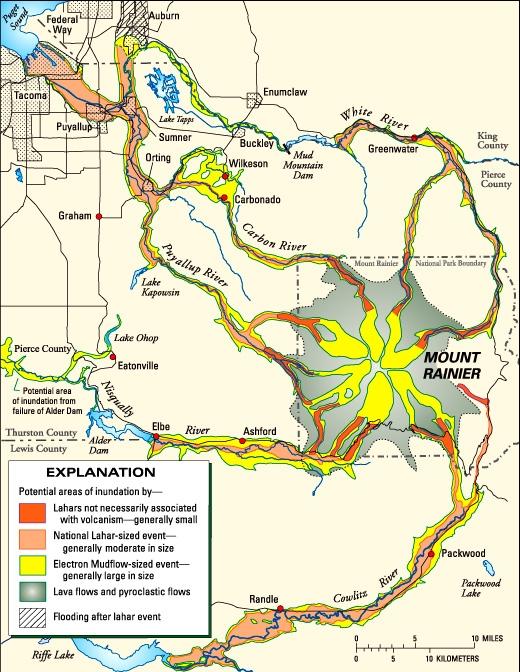
Definition of Geology:Geology is the study of the Earth, the materials of which it is made, the structure of those materials, and the processes acting upon them. It includes the study of organisms that have inhabited our planet. An important part of geology is the study of how Earth’s materials, structures, processes and organisms have changed over time. What Does a Geologist Do?Geologists work to understand the history of our planet. The better they can understand Earth’s history the better they can foresee how events and processes of the past might influence the future. Here are some examples: Geologists study earth processes: Many processes such as landslides, earthquakes, floods and volcanic eruptions can be hazardous to people. Geologists work to understand these processes well enough to avoid building important structures where they might be damaged. If geologists can prepare maps of areas that have flooded in the past they can prepare maps of areas that might be flooded in the future. These maps can be used to guide the development of communities and determine where flood protection or flood insurance is needed. Geologists study earth materials: People use earth materials every day. They use oil that is produced from wells, metals that are produced from mines, and water that has been drawn from streams or from underground. Geologists conduct studies that locate rocks that contain important metals, plan the mines that produce them and the methods used to remove the metals from the rocks. They do similar work to locate and produce oil, natural gas and ground water. Geologists study earth history: Today we are concerned about climate change. Many geologists are working to learn about the past climates of earth and how they have changed across time. This historical geology news information is valuable to understand how our current climate is changing and what the results might be. Geology as a Career:Geology can be a very interesting and rewarding career. The minimum training required is a four-year college degree in geology. Pre-college students who are interested in becoming geologists should take a full curriculum of college preparatory courses, especially those in math, science, and writing. Courses related to computers, geography and communication are also valuable.
Although a bachelor's degree is required for entry level employment, many geologists earn master's and/or doctorate degrees. The advanced degrees provide a higher level of training, often in a geology specialty area such as paleontology, mineralogy, hydrology or volcanology. Advanced degrees will often qualify the geologist for supervisory positions, research assignments or teaching positions at the university level. These are some of the most sought after jobs in the field of geology. Employment opportunities for geologists are very good. Most geology graduates with a strong academic background and good grades have no trouble finding employment if they are willing to move to a location where work is available. Employment Outlook:Over the next several years the number of geology job openings is expected to exceed the number of students graduating from university geology programs. Starting salaries for geologists have recently ranged from $50,000 to $100,000 per year. How Can You Become a Geologist?If you are a pre-college student can prepare to become a geologist by doing well in all of your courses. Science courses are especially important but math, writing, and other disciplines are used by every geologist during every working day. If you are considering college or graduate school there are many universities that offer courses or programs in geology. Visit the website of a school that offers a geology degree, get in touch with the geology department, let them know you are interested and make arrangements to visit the campus. Don't be hesitant. Good schools and professors want to be contacted by interested students.
 |  |
|


